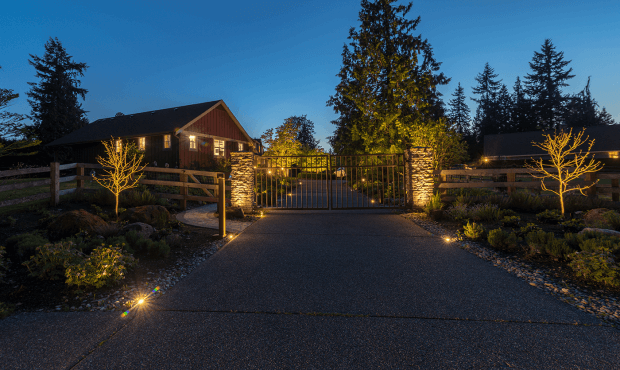

Understanding the Principles Behind Thoughtful Outdoor Lighting
Outdoor landscape lighting design is often misunderstood as the simple placement of fixtures around a home. In reality, thoughtful lighting design is a discipline that balances architecture, landscape, movement, and atmosphere to create outdoor environments that feel intentional and enduring after dark.
This guide is designed to help homeowners understand what professional outdoor lighting design truly involves, why it matters, and how it shapes the long-term success of an installation.

What Is Outdoor Landscape Lighting Design?
Outdoor landscape lighting design is the strategic planning of light across a property before installation begins. It considers how light interacts with the home, gardens, pathways, and outdoor living spaces — and just as importantly, where light should be restrained or absent.
A professional lighting design answers fundamental questions such as:
-
What areas require illumination for safety or navigation?
-
Which architectural or landscape features deserve emphasis?
-
How will light guide movement without drawing attention to itself?
-
What balance of light and shadow best preserves depth and atmosphere?
Rather than focusing on fixture quantity, design prioritizes intent, placement, and long-term cohesion.

Design Comes Before Installation
One of the most common mistakes homeowners make is approaching outdoor lighting as an installation-first project. While installation is essential, it should always follow a clear design plan.
Design-first lighting offers several advantages:
-
Visual cohesion: Lighting feels unified across the property rather than piecemeal.
-
Efficiency: Fixtures are used where they have the greatest impact, avoiding excess.
-
Flexibility: A plan allows for phased installation or future expansion.
-
Longevity: Thoughtful placement reduces the need for frequent adjustments or corrections.
A lighting design plan acts as a roadmap, ensuring the final installation reflects intention rather than improvisation.
A well-developed lighting design plan provides clarity for the installation phase and ensures the original vision is carried through with precision.

Key Elements of Thoughtful Lighting Design
Every property is unique, but professional outdoor lighting design consistently evaluates several core elements. To see how these elements work together across a complete property, explore the five layers of luxury outdoor lighting design.
Architecture
Lighting should support the form and structure of the home without overpowering it. Subtle illumination can enhance materials, rooflines, and entryways while maintaining balance.
Gardens and Plantings
Trees, shrubs and gardens are living elements that change over time. Lighting design must account for plant growth, seasonal shifts, texture and the changing relationship between light and foliage. Explore our backyard and garden lighting gallery to see how layered illumination can reveal mature trees, planting beds, pathways and outdoor gathering spaces after dark.
Pathways and Circulation
Path and step lighting guide movement safely while remaining visually unobtrusive. Well-designed circulation lighting feels intuitive rather than directive.
Outdoor Living Spaces
Patios, decks, and gathering areas benefit from layered lighting that creates warmth and usability without harsh brightness.
Sightlines and Views
A designer considers how lighting appears from inside the home as well as from key outdoor vantage points. Preserving darkness in certain areas enhances contrast and depth.
Understanding Color Temperature in Outdoor Lighting
Color temperature plays a defining role in how outdoor lighting feels. Measured in kelvins (K), color temperature influences whether light appears warm, neutral, or cool.
In landscape environments, warmer color temperatures are typically preferred. They complement natural materials such as stone, wood, and foliage while preserving a sense of calm. Cooler lighting, by contrast, can appear stark or intrusive when applied outdoors.
Thoughtful lighting design ensures:
-
Consistency in color temperature across the property
-
Harmony between architecture and landscape
-
Reduced glare and visual fatigue
-
Alignment with dark-sky-friendly practices
Color temperature is not an afterthought — it is foundational to successful outdoor lighting design.

Designing for the Pacific Northwest Landscape
Outdoor lighting design must respond to its environment. In the Pacific Northwest, climate and landscape conditions require particular attention.
Design considerations include:
-
Dense evergreen plantings that absorb and diffuse light
-
Moisture and reflective surfaces that alter light behavior
-
Seasonal variations in daylight length
-
The need for durability and long-term performance
A regionally informed design ensures lighting feels appropriate throughout the year, not just during one season.
When to Work With a Professional Lighting Designer
While some small projects may seem straightforward, many properties benefit from professional lighting design — particularly when:
-
The landscape is layered or expansive
-
Multiple outdoor areas must work together cohesively
-
Long-term planning or phased installation is desired
-
The goal is subtlety rather than brightness
A professional designer brings both technical knowledge and aesthetic judgment, ensuring lighting enhances rather than competes with the landscape.

How a Design Plan Supports Better Installation
A well-developed lighting design plan provides clarity for installation teams and homeowners alike. It defines placement, intent, and hierarchy, reducing uncertainty during execution.
Design-led installations typically result in:
-
More precise fixture placement
-
Fewer adjustments after installation
-
Improved long-term maintenance outcomes
-
Greater satisfaction with the finished environment
For homeowners interested in the design process itself, a custom lighting design plan offers a clear starting point for transforming outdoor spaces with intention.
Learn more about our custom lighting design approach here.
Creating Outdoor Spaces That Endure
Outdoor landscape lighting design is ultimately about restraint, balance, and longevity. When lighting is thoughtfully planned, it fades into the background — allowing architecture, gardens, and human connection to take center stage.
By understanding the principles behind professional lighting design, homeowners are better equipped to make decisions that lead to beautiful, enduring outdoor environments.

Bothell / Mill Creek Garden Estate
The homeowners wanted their landscape to feel warm, inviting, and usable after sunset, while highlighting the natural beauty of mature evergreens, pathways, and handcrafted stonework.

Magnolia Seattle View Residence
Northwest Outdoor Lighting installed 56 warm 2700K LED fixtures throughout pathways, stone steps, driveway approach, garden walls, and mature trees — illuminating the property without overpowering the natural environment.