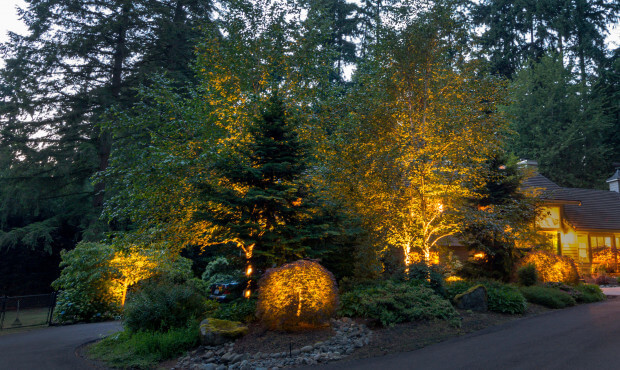

Direct Lighting vs. Indirect Lighting: What’s the Difference & When to Use Each
Outdoor & architectural lighting relies on two foundational techniques: direct lighting and indirect lighting. Understanding how each behaves—how light reflects, travels, and interacts with surfaces—helps homeowners and designers create safer, more comfortable, and more beautiful spaces.
In this guide, we’ll break down how each approach works, where each shines (literally), and how to combine them for cohesive outdoor living environments.
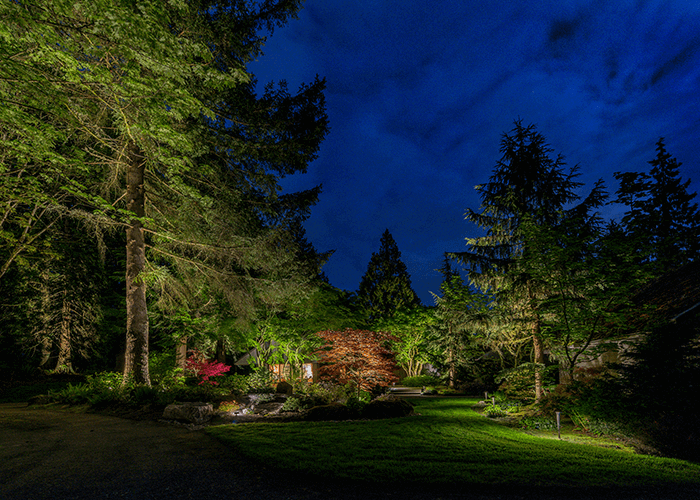
What is Direct Lighting?
Direct lighting illuminates a surface or subject without bouncing off another surface first. The light beam travels from the fixture straight to the intended target.
Common Characteristics
-
Focused, forward-facing beam
-
Strong visibility and contrast
-
Brighter appearance at the source
-
Creates defined highlights and shadows
Where You See Direct Lighting Indoors
Direct illumination is used for:
-
Task lighting at kitchen counters
-
Desk lamps and reading lights
-
Track lighting highlighting art
-
Ceiling-mounted downlights
Where Direct Lighting Works Outdoors
Spot and wash fixtures are frequently used for:
✔ Path safety (walkways, steps, driveways)
✔ Security lighting (entry points, garages)
✔ Architectural features (pillars, stonework)
✔ Garden focal points (trees, sculptures)
Because it highlights surfaces directly, it enhances textures like stone, wood grain, and landscape materials.
Benefits of Direct Lighting
-
Increases safety on pathways, stairs, and driveways
-
Defines architectural lines (soffits, walls, trim)
-
Provides clear visibility for tasks and navigation
-
Improves security by removing dark hiding spots
-
Accents materials like stucco, cedar, or masonry
Considerations & Limitations
Direct beams can create:
-
Glare (especially at eye level)
-
Overly bright hot spots
-
Sharp shadows
Pro design tip:
Placing fixtures lower, using glare shields, or adjusting beam spreads prevents harsh output.

What is Indirect Lighting?
Indirect lighting illuminates a space by bouncing light off surfaces such as ceilings, walls, or the ground instead of directly hitting the viewer’s eye.
The result is soft, diffused illumination without strong shadows.
Common Characteristics
-
Wide, ambient glow
-
Minimal glare
-
Gentle light distribution
-
Lower perceived brightness, higher comfort
Where You See Indirect Lighting Indoors
This method is often used in:
-
Cove lighting along ceilings
-
Wall-mounted sconces
-
Behind mirrors or cabinetry
-
Under-cabinet strips reflecting off counters
Where Indirect Lighting Works Outdoors
Indirect illumination excels for:
✔ Under-rail or under-cap deck lighting
✔ Bench seating and step treads
✔ Eave-mounted soffit lighting
✔ Wall washing using reflective surfaces
✔ Underwater lighting in pools or ponds
Light reflects off nearby surfaces, creating a welcoming glow ideal for nighttime entertaining.
Benefits of Indirect Lighting
-
Improves visual comfort (no harsh glare)
-
Creates an inviting atmosphere
-
Enhances depth and dimension
-
Reduces light pollution
-
Supports dark sky goals
Considerations & Limitations
Because indirect light is reflected, it may:
-
Require lighter surfaces for effective bounce
-
Appear dimmer without proper planning
-
Need more fixtures to achieve balanced output
Surface colors matter—dark stone absorbs light while lighter walls reflect it.
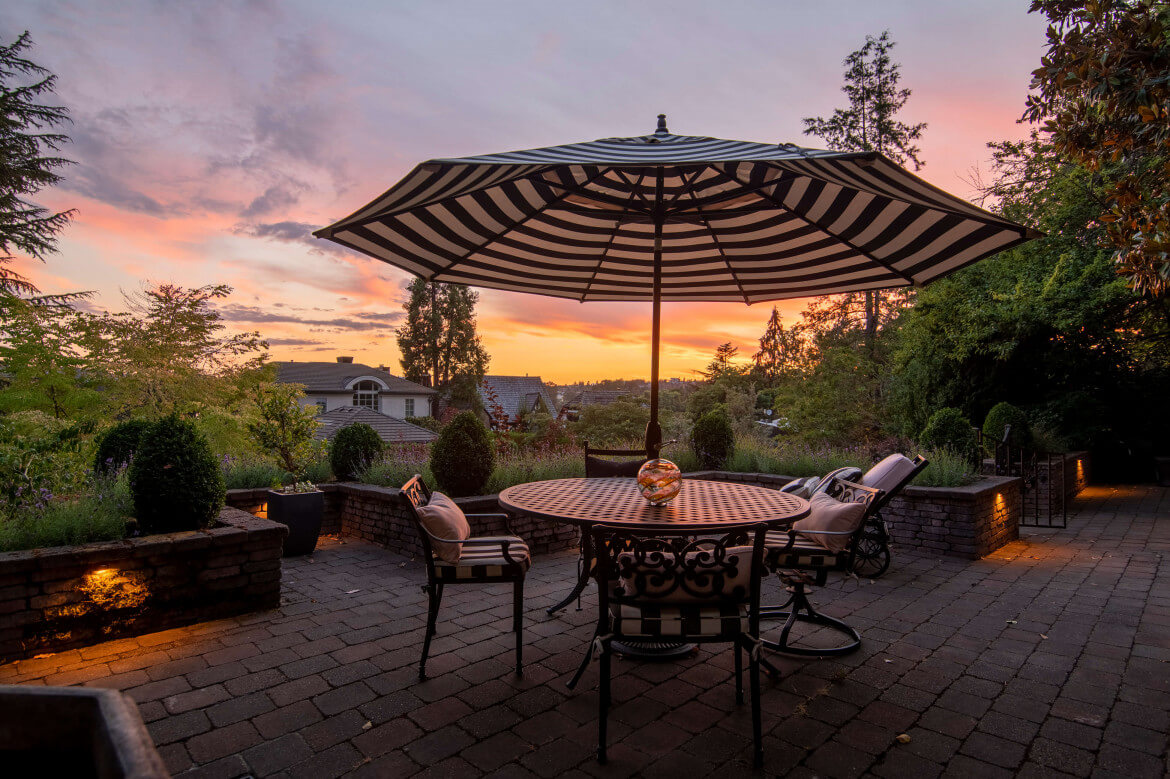
Direct vs. Indirect Lighting: Side-by-Side Comparison
| Feature | Direct Lighting | Indirect Lighting |
|---|---|---|
| Beam Type | Focused & directional | Diffused & ambient |
| Best For | Safety, visibility, accents | Mood, comfort, wash lighting |
| Common Surfaces | Pathways, facades | Walls, ceilings, decking |
| Glare Risk | Higher | Low |
| Shadowing | Strong | Soft |
| Dark Sky Friendly | Can be | Very |

When to Use Direct vs. Indirect Lighting Outdoors
Use Direct Lighting When You Need:
✔ Path guidance
✔ Security visibility
✔ Defined financial features (columns, stone, art)
✔ Strong contrast
Use Indirect Lighting When You Want:
✔ Relaxed ambiance
✔ Entertainment lighting
✔ Gentle illumination without glare
✔ Architectural glow
In most outdoor design work, the answer is not either/or — but both.
The most effective exterior lighting blends:
-
direct task lighting for navigation and safety
-
indirect ambient lighting for atmosphere
Real Design Examples (PNW Case Studies)
We could insert 3–4 mini examples here featuring NWOL projects:
-
Deck lighting (indirect under-rail) - Ballard Residence
-
Driveway lighting (direct path lights) - Woodinville Home
-
Tree uplighting (direct accents) - Edmonds Residence
-
Pergola & patio lighting (indirect soffit or wall wash) - Lake of the Woods Estate

Final Thoughts
Direct and indirect lighting play complementary roles in landscape and architectural environments. When layered together, they create outdoor spaces that are safe, inviting, and visually rich—without overwhelming the eye or the night sky.
If you're planning a new lighting design in the Pacific Northwest, our team can help you determine the right combination for your home, deck, or landscape.

Bothell / Mill Creek Garden Estate
The homeowners wanted their landscape to feel warm, inviting, and usable after sunset, while highlighting the natural beauty of mature evergreens, pathways, and handcrafted stonework.

Magnolia Seattle View Residence
Northwest Outdoor Lighting installed 56 warm 2700K LED fixtures throughout pathways, stone steps, driveway approach, garden walls, and mature trees — illuminating the property without overpowering the natural environment.

Mercer Island Waterfront Estate
This installation celebrates the Northwest environment — mature evergreens, waterfront views, native plantings, and contemporary exterior architecture — all brought to life after sunset through layered lighting, intentional focal points, and seamless transitions from house to shoreline.